
Complete Bob Haircut Guide: Find the Right Bob for You
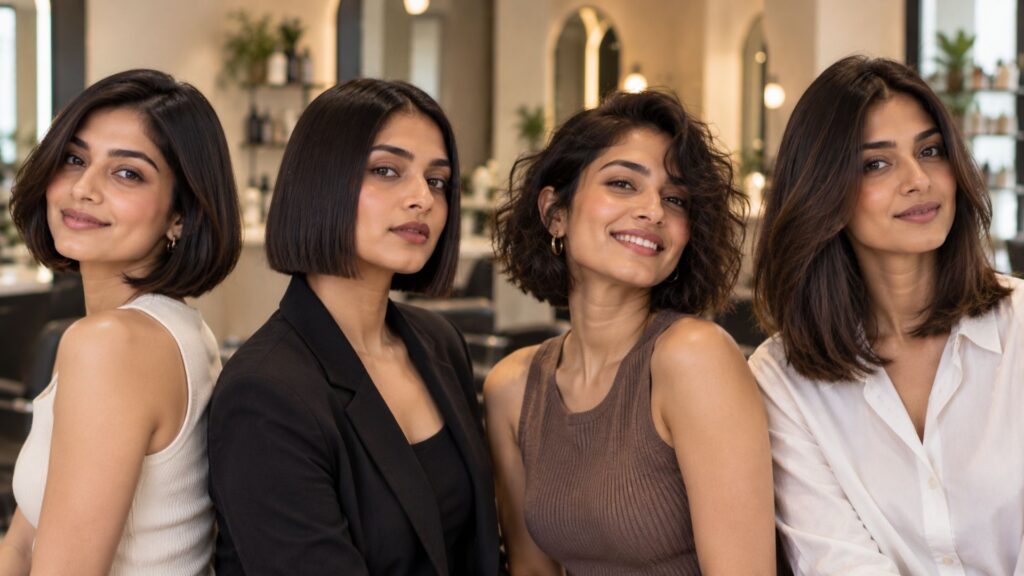
A bob haircut is one of the most versatile women’s haircuts because it can be customized by length, shape, layering, texture and styling. From a classic blunt bob and sleek French bob to a textured bob and longer lob, the right version depends on your face shape, hair texture, density, lifestyle and preferred maintenance level.
The bob isn’t just one haircut.
It’s a whole family of shapes that can be adapted to create anything from a sharp, sophisticated look to a soft, effortless style.
And that’s why choosing the right bob is about more than showing your stylist a photograph.
What Is a Bob Haircut?
A bob is generally characterized by hair being cut into a defined shape around the head, traditionally around the jawline or above the shoulders.
However, modern bob haircuts can range from:
- Very short bobs
- Chin-length bobs
- Jaw-length bobs
- Shoulder-length bobs
- Layered bobs
- Textured bobs
- Angled bobs
- Blunt bobs
- Long bobs or lobs
The final appearance depends on where the perimeter sits, how the hair is graduated or layered, and how much weight is retained.
Why Is the Bob Haircut So Popular?
The bob can completely change the appearance of your hairstyle without requiring extremely short hair.
It can offer:
- A clean, defined silhouette
- Easier everyday styling
- A modern appearance
- Different styling possibilities
- The option to remove unwanted length
- A range of shapes for different hair textures
A bob can also be customized to look soft, sharp, sleek, textured, playful or sophisticated.
12 Popular Types of Bob Haircuts
1. Classic Bob
The classic bob has a clean, relatively consistent shape around the head.
It can sit around the jawline, chin or slightly below depending on the desired look.
Best suited for:
- Straight hair
- Fine to medium-density hair
- Clean, polished styling
- Minimalist hairstyles
The exact length should be customized according to facial proportions and hair density.
2. Blunt Bob
A blunt bob has a strong, clearly defined perimeter with minimal visible layering.
It can make the ends appear visually fuller, which can be useful for some people with fine hair.
A blunt bob can be worn:
- Sleek and straight
- Slightly textured
- With a centre part
- With a side part
The cleaner the perimeter, the more important regular shape maintenance becomes.
3. Textured Bob
A textured bob introduces movement through carefully controlled layering or texturizing.
It can create a more relaxed appearance than a very blunt bob.
This style can work particularly well for:
- Naturally wavy hair
- Medium-density hair
- People who prefer an effortless look
However, the amount of texturizing should be customized.
Too much removal of weight can make fine hair appear less dense.
4. Layered Bob
A layered bob incorporates different lengths to create movement and shape.
The layers may be:
- Subtle
- Face-framing
- Internal
- More pronounced
A layered bob can be adapted for straight, wavy or curly hair, although the cutting technique should change according to the natural texture.
5. Angled Bob
An angled bob is shorter toward the back and gradually becomes longer toward the front.
This creates a directional silhouette.
The angle can be subtle or dramatic depending on the desired look.
It can be particularly useful if you want:
- A structured hairstyle
- A modern silhouette
- More length around the face
6. Graduated Bob
A graduated bob uses controlled changes in length and weight distribution, particularly toward the back.
This can create:
- Shape at the back
- Lift
- A more structured silhouette
- A clean neckline
Graduation should be customized to the thickness and natural fall of your hair.
7. French Bob
The French bob is generally shorter and often associated with a chic, slightly effortless aesthetic.
It may be paired with:
- Short fringe
- Soft fringe
- Natural texture
- A jaw or cheek-level length
It can create a strong fashion-forward look but may require more styling and maintenance depending on the design.
8. Long Bob / Lob
The lob, or long bob, sits somewhere between a traditional bob and longer hair.
It can fall around the shoulders or collarbone depending on the individual’s proportions and desired length.
The lob is particularly versatile because it can still be:
- Tied back
- Styled straight
- Worn wavy
- Curled
- Layered
If you’re nervous about going short, a lob can be a useful starting point.
9. Inverted Bob
An inverted bob has a shorter back with longer sections toward the front.
It creates a noticeable forward movement in the haircut.
The angle can be customized depending on:
- Neck length
- Hair density
- Facial proportions
- Desired level of drama
10. Curly Bob
A curly bob is designed around the natural curl pattern rather than simply applying a straight-hair bob shape to curly hair.
The stylist needs to consider:
- Curl pattern
- Shrinkage
- Density
- Weight
- Natural volume
The final length may appear significantly shorter once the curls return to their natural state.
11. Wavy Bob
A wavy bob can look relaxed and dimensional because the natural texture creates movement throughout the haircut.
A stylist can customize the shape to encourage the natural wave rather than fighting it.
This can be a good option for women who want a bob without a completely sleek finish.
12. Asymmetrical Bob
An asymmetrical bob has deliberately uneven lengths, usually with one side longer than the other.
It creates a more distinctive and fashion-forward silhouette.
This type of bob generally requires more careful maintenance because the asymmetry is part of the design.
Bob Haircuts by Length
The length of your bob can dramatically change its appearance.
Very Short Bob
Usually sits around the cheek, jaw or upper ear area.
Look: Bold and structured
Maintenance: Higher
Chin-Length Bob
Ends around the chin.
Look: Classic and polished
Maintenance: Moderate to high
Jaw-Length Bob
Creates a stronger facial frame.
Look: Defined and sophisticated
Maintenance: Moderate
Shoulder-Length Bob
Offers more versatility.
Look: Modern and practical
Maintenance: Moderate
Long Bob / Lob
Falls around the shoulder or collarbone area.
Look: Versatile and relatively easy to transition
Maintenance: Moderate to lower depending on the shape
Which Bob Is Best for Your Face Shape?
Face shape can help guide the placement and silhouette of your bob, but it shouldn’t be the only consideration.
Oval Face
An oval face generally allows plenty of flexibility.
You could explore:
- Blunt bob
- Layered bob
- Lob
- Textured bob
- Angled bob
Round Face
Longer bobs and styles with vertical movement can be considered.
Options may include:
- Longer lob
- Angled bob
- Soft face-framing
- Longer layers
The goal isn’t necessarily to “hide” a round face but to create the silhouette you prefer.
Square Face
A square face may suit either soft or structured bob shapes depending on your personal preference.
Consider:
- Textured bob
- Longer bob
- Softly angled bob
- Face-framing movement
You can also choose a blunt bob if you prefer to emphasize the natural structure of your face.
Heart-Shaped Face
A bob can be customized to balance the visual relationship between the forehead, cheekbones and chin.
Potential options include:
- Chin-length bob
- Soft layered bob
- Lob
- Side-swept fringe
Long or Oblong Face
A bob with some width and movement can create a balanced overall silhouette.
Consider:
- Chin-length bob
- Wavy bob
- Layered bob
- Curtain fringe with a bob
The ideal placement depends on your individual proportions.
Which Bob Is Best for Indian Hair?
There isn’t one universal bob for Indian hair because Indian hair comes in many different textures and densities.
You may have:
- Fine straight hair
- Thick straight hair
- Wavy hair
- Curly hair
- High-density hair
- Fine strands with high density
Climate and humidity can also affect how the haircut behaves.
A bob should therefore be customized based on your actual hair, rather than simply selecting a style because it looks good in a photograph.
Best Bob Haircuts for Fine Hair
If your hair is fine, preserving visual density can be important.
You may want to discuss:
- Blunt bob
- Chin-length bob
- Minimal-layer bob
- Clean lob
- Softly textured bob
Too much layering or aggressive texturizing can sometimes make the ends appear thinner.
A clean perimeter can help retain the appearance of fullness.
Best Bob Haircuts for Thick Hair
Thick hair provides many possibilities.
Consider:
- Layered bob
- Graduated bob
- Textured bob
- Angled bob
- Lob with internal layering
The objective isn’t necessarily to remove as much hair as possible.
Instead, weight can be distributed strategically to create the intended silhouette.
Best Bob Haircuts for Straight Hair
Straight hair can showcase the geometry of a bob very clearly.
Options include:
- Blunt bob
- Sleek bob
- Angled bob
- Graduated bob
- Long bob
A straight bob can look highly polished, but its clean lines can also make regrowth more noticeable.
Best Bob Haircuts for Wavy Hair
Wavy hair can create a softer, more relaxed bob.
Consider:
- Textured bob
- Layered bob
- Wavy lob
- Softly graduated bob
The haircut should be designed according to how your waves naturally fall rather than how the hair looks when completely straightened.
Best Bob Haircuts for Curly Hair
Curly bobs require careful customization.
Your stylist should consider:
- Curl pattern
- Shrinkage
- Density
- Curl-by-curl movement
- Desired volume
- Dry versus wet length
A curly bob can look dramatically different when dry, so the final shape should be planned around your natural texture.
Bob Haircut With Bangs
A bob can be paired with different fringe styles.
Curtain bangs
Soft and blended.
Side-swept fringe
Creates an angled visual line.
Wispy bangs
Light and less structured.
Blunt bangs
Creates a stronger graphic appearance.
Short fringe
Creates a bold, fashion-forward look.
The right fringe depends on your hairline, forehead proportions, texture and maintenance preferences.
Is a Bob Haircut High Maintenance?
It depends on the bob.
A very short, blunt or highly structured bob generally requires more frequent shaping because small amounts of growth can change the silhouette.
A longer, softer lob may be more forgiving.
Your maintenance level depends on:
- Length
- Perimeter
- Graduation
- Layers
- Fringe
- Natural texture
- Desired styling
Before getting a bob, ask your stylist:
“How often will I need to maintain this shape?”
That question can help you choose a haircut that fits your lifestyle.
How Often Should You Get a Bob Haircut?
For a structured bob, many people may need a refresh approximately every 6–8 weeks to maintain its intended shape.
A softer or longer bob may be maintained at longer intervals.
Fringe can require even more frequent trimming.
These are guidelines rather than fixed rules.
Your individual growth rate and desired hairstyle should determine the schedule.
Can You Tie a Bob Haircut?
It depends on the length.
A very short bob may not tie comfortably.
A chin-length bob may allow:
- Small ponytails
- Half-up styles
- Clips
A lob is considerably more versatile and can usually be styled into:
- Ponytails
- Low buns
- Half-up hairstyles
- Braids
- Clipped styles
If tying your hair is important to you, tell your stylist before deciding on the final length.
What Should You Consider Before Getting a Bob?
Before making the cut, think about:
1. Your desired length
How short are you comfortable going?
2. Your natural texture
Will you wear your hair naturally or style it regularly?
3. Your hair density
Fine and thick hair behave very differently.
4. Your face shape
Use it as a guide, not a restriction.
5. Your lifestyle
Do you have time for daily styling?
6. Maintenance
How often can you visit the salon?
7. Your ability to tie your hair
Important if you regularly work out or prefer tied hairstyles.
Common Bob Haircut Mistakes
Choosing a Bob Only Because It Looks Good on Someone Else
The same bob can look completely different depending on hair texture, density and facial proportions.
Use reference photographs for inspiration, but ask your stylist to customize the shape.
Going Too Short Too Quickly
If you’ve always had long hair, consider transitioning through a lob or longer bob first.
You can always go shorter later.
Ignoring Your Natural Texture
A straight-hair bob and curly-hair bob require very different cutting approaches.
Removing Too Much Weight
This can be particularly important for fine hair.
More texture doesn’t automatically mean more volume.
Forgetting About the Back of the Hair
A bob is a 360-degree haircut.
Don’t only consider how it looks from the front.
Ask your stylist about:
- Neckline
- Graduation
- Back shape
- Side profile
- Front length
How to Choose Your Perfect Bob
Instead of asking:
“Which bob is trending?”
Ask:
“Which bob works with my hair, face, lifestyle and desired maintenance?”
A professional consultation should evaluate:
Face shape
+
Hair texture
+
Hair density
+
Hair condition
+
Desired length
+
Styling habits
+
Maintenance commitment
That combination will produce a much more personalized result.
Expert Tip from Mr. Kapil Sharma
“A bob should never be selected only by its name. The same bob can look completely different on fine straight hair, thick straight hair, waves or curls. The best bob is the one that is designed around the client’s natural hair, facial proportions and lifestyle.”
— Mr. Kapil Sharma, Founder & Creative Director, Kapil’s Salon & Academy
Bob Haircut FAQ
What is the most popular bob haircut?
Popular bob variations include blunt bobs, textured bobs, layered bobs, angled bobs and long bobs. The most suitable option depends on the individual’s hair and desired style.
Which bob is best for Indian women?
There isn’t one universal bob for Indian women. Fine, thick, straight, wavy and curly hair may require different approaches. A customized consultation is more useful than choosing a bob based only on nationality or face shape.
Is a bob good for thin hair?
A blunt or minimally layered bob can help maintain the appearance of density. Excessive layering may make the ends appear less full.
Is a bob good for thick hair?
Yes. Thick hair can work well with layered, graduated, angled or textured bobs. Weight distribution is important when designing the shape.
Is a bob good for a round face?
Yes. Longer bobs, angled shapes and carefully placed face-framing can create different visual effects. The ideal length depends on your individual facial proportions.
Is a bob good for a square face?
Yes. Both soft and structured bobs can work with a square face. The choice depends on whether you prefer to soften or emphasize your natural facial structure.
How often should a bob be maintained?
A structured bob may need shaping around every 6–8 weeks, while a longer or softer bob can often be maintained for longer. Fringe may need more frequent trimming.
Can I tie my hair after getting a bob?
That depends on the length. A longer bob or lob generally provides more options for ponytails and other tied styles.
Will a bob make my hair look thicker?
A well-designed blunt perimeter can make fine hair appear visually fuller, but the result depends on your natural density, strand thickness and haircut design.
Get Your Bob Haircut at Kapil’s Salon
A bob is one of the most customizable haircuts you can choose—but getting the right bob is about more than selecting a photograph.
At Kapil’s Salon, your stylist can assess your:
- Face shape and proportions
- Hair texture
- Hair density
- Existing haircut
- Hair condition
- Preferred length
- Styling routine
- Maintenance expectations
From a blunt bob to a textured lob, graduated bob or curly bob, the haircut can be adapted to work with your natural hair.
Ready for your bob transformation? Book a professional haircut consultation at Kapil’s Salon.
Expert Review by Mr. Kapil Sharma
Founder & Creative Director, Kapil’s Salon & Academy