

Why Is My Hair Falling?
Seeing extra hair on your pillow, comb, shower floor or clothes can be worrying.
But hair shedding does not always mean you’re going bald.
People normally shed around 50–100 hairs a day, although the amount can vary. Hair loss can happen for many different reasons, including genetics, hormonal changes, stress, illness, nutritional problems, medications, tight hairstyles and damage.
The important question isn’t simply:
“How much hair am I losing?”
It’s:
“Why is my hair falling, and is the cause temporary or ongoing?”
This guide explains 15 common causes of hair fall, what they can look like and when you should seek professional medical advice.
Quick Answer: What Causes Hair Fall?
The most common causes include:
- Genetics
- Stress
- Illness or fever
- Rapid weight loss
- Nutritional deficiencies
- Hormonal changes
- Thyroid problems
- Pregnancy and postpartum changes
- Certain medications
- Tight hairstyles
- Chemical and heat damage
- Scalp conditions or infections
- Alopecia areata
- Age-related changes
- Repeated hair pulling or mechanical damage
Several causes can also occur at the same time.
Hair Fall vs Hair Breakage: First Understand the Difference
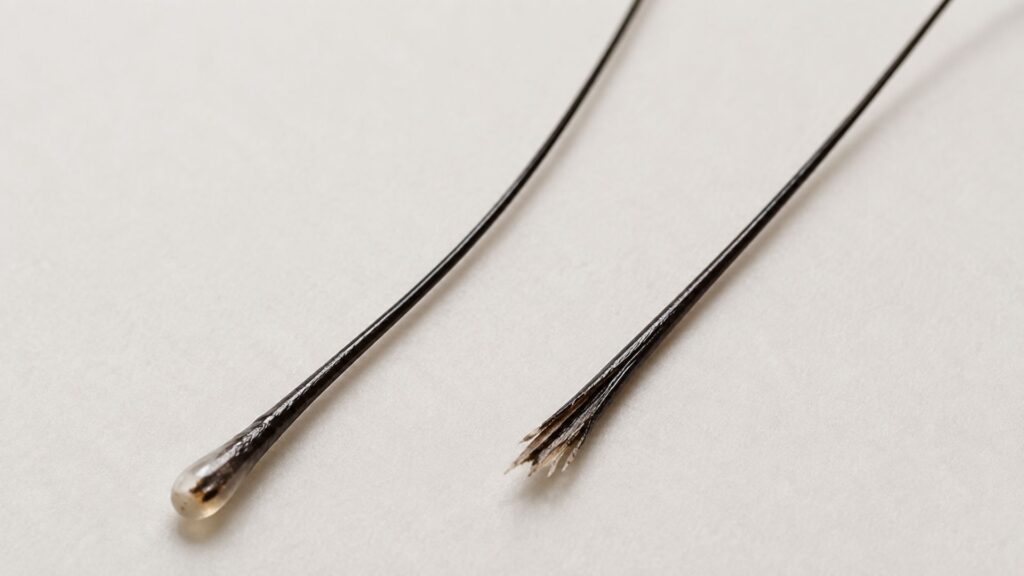
Before identifying the cause, determine whether you’re experiencing hair shedding or hair breakage.
Hair shedding
A complete hair strand comes out from the scalp.
Hair breakage
The hair snaps somewhere along its length.
You may notice:
- shorter pieces of hair
- uneven lengths
- split ends
- rough ends
- increased breakage during brushing
These are different problems and require different approaches.
15 Common Causes of Hair Fall
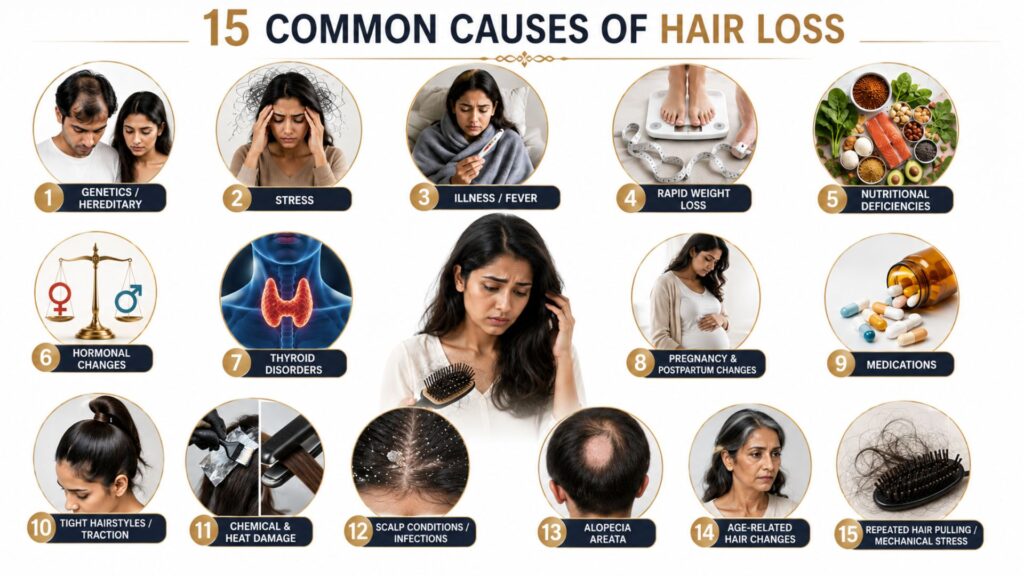
1. Genetics
One of the most common causes of gradual hair loss is hereditary or pattern hair loss.
It can affect both men and women.
In men, it often appears as:
- receding hairline
- thinning at the crown
- gradual reduction in density
In women, thinning may be more noticeable around the parting and top of the scalp.
If hair loss is gradual and follows a recognizable family pattern, genetics may be an important factor.
A salon can help with styling and appearance, but diagnosing pattern hair loss should involve a qualified medical professional.
2. Stress
Major physical or emotional stress can trigger increased shedding.
This type of shedding is often called telogen effluvium.
The important thing to understand is that the hair may not fall immediately after the stressful event. Increased shedding can become noticeable months later.
Potential triggers can include:
- significant emotional stress
- major illness
- surgery
- substantial physical stress
- rapid changes in the body
The key is identifying the trigger rather than assuming that a new shampoo is responsible.
3. Illness, Fever or Major Physical Stress
A significant illness can temporarily disrupt the normal hair-growth cycle.
Some people notice increased shedding after recovering from an illness rather than during it.
For example, temporary shedding has been documented after COVID-19 infection.
If you notice a sudden change in shedding after a major illness, discuss it with a healthcare professional if it persists or concerns you.
4. Rapid Weight Loss or Restrictive Dieting
Your hair requires adequate nutritional support for normal growth.
Rapid weight loss or poor nutrition can be associated with increased hair loss. Mayo Clinic lists significant weight loss and poor nutrition among risk factors for hair loss.
This is particularly important if your hair fall started after:
- crash dieting
- severe calorie restriction
- major weight loss
- an extremely restrictive diet
Instead of randomly taking hair supplements, identify whether your diet or health may be contributing.
A doctor or registered dietitian can determine whether nutritional evaluation is appropriate.
5. Nutritional Problems
Hair growth can be affected when the body doesn’t receive adequate nutrition.
Depending on the individual, a healthcare professional may investigate nutritional factors when evaluating unexplained hair loss.
Don’t automatically assume:
“My hair is falling, so I need biotin.”
The correct supplement depends on the actual cause.
More supplements are not automatically better.
If hair loss is persistent, medical evaluation is more useful than guessing which supplement you need.
6. Hormonal Changes
Hormonal changes can affect the hair-growth cycle.
Possible situations include:
- pregnancy
- after childbirth
- menopause
- hormonal disorders
- other endocrine changes
Hormonal causes can produce temporary or ongoing hair changes depending on the underlying condition.
This is one reason why sudden changes in hair density shouldn’t always be treated as a simple hair-care problem.
7. Thyroid Problems
Thyroid disorders can be associated with hair loss.
If hair fall occurs alongside other unexplained changes in your health, a doctor may consider whether an underlying medical condition is contributing.
Hair loss itself cannot tell you whether your thyroid is functioning normally.
That’s why diagnosis matters more than guessing from symptoms alone.
8. Pregnancy and Postpartum Hair Shedding
Many women notice significant shedding after pregnancy.
This can be alarming because the amount of hair in the shower or brush may suddenly appear much higher than usual.
Postpartum shedding can be temporary, but persistent or unusual hair loss should be discussed with a healthcare professional. Mayo Clinic includes pregnancy and childbirth among hormonal changes associated with hair loss.
9. Certain Medications
Some medications can cause hair loss as a side effect.
The list can include medications used for various conditions, including cancer, arthritis, depression, heart conditions, gout and high blood pressure.
If your hair fall began after starting a medication:
Do not stop the medication yourself.
Speak with the doctor who prescribed it.
They can determine whether the medication could be contributing and whether an alternative is appropriate.
10. Tight Hairstyles
Your hairstyle can contribute to hair loss when it repeatedly places tension on the follicles.
Examples include:
- very tight ponytails
- tight braids
- tightly pulled buns
- extensions that create excessive tension
- other styles that continuously pull on the hair
This can cause traction alopecia.
Early changes in styling habits may help prevent continued mechanical stress.
11. Excessive Heat and Chemical Processing
Repeated chemical processing and aggressive styling can contribute to hair shaft damage and breakage.
Examples include frequent:
- bleaching
- colouring
- straightening
- perming
- high-heat styling
This may look like hair fall even when the main problem is actually breakage.
The distinction is important.
If your hair is snapping along its length, the priority is reducing damage and improving hair care—not treating it as a scalp hair-loss condition.
12. Scalp Conditions and Infections
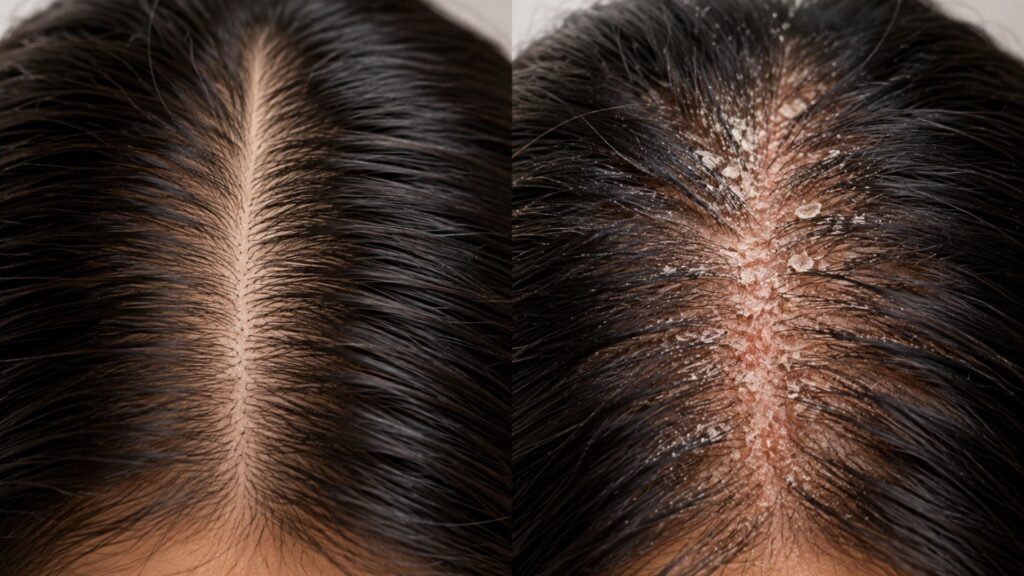
Some scalp conditions can affect hair growth or cause hair to break.
For example, scalp infections such as ringworm can be associated with:
- scaling
- redness
- swelling
- broken hairs
- areas of hair loss
Mayo Clinic notes that spreading scalp scaling with broken hair can be a sign of ringworm.
If you have persistent scalp inflammation, scaling, pain or patchy hair loss, seek medical evaluation.
13. Alopecia Areata
Alopecia areata is an autoimmune condition that can cause sudden, patchy hair loss.
It may appear as:
- round bald patches
- oval patches
- sudden loss of hair in localized areas
Some people may experience itching or discomfort around affected areas.
This isn’t something that should be treated simply as “weak hair.”
A dermatologist can assess the pattern and determine the appropriate next steps.
14. Age-Related Hair Changes
Hair characteristics naturally change as we age.
You may notice:
- lower density
- slower-looking growth
- changes in texture
- increased visibility of the scalp
Age-related pattern hair loss is particularly common and is strongly influenced by genetics.
The earlier persistent pattern hair loss is professionally evaluated, the more informed your treatment options can be.
15. Repeated Hair Pulling and Mechanical Stress
Hair can also be damaged or lost through repeated physical pulling.
This can happen through:
- tight styling
- repeated tugging
- aggressive detangling
- habitual hair pulling
A condition called trichotillomania involves a recurrent urge to pull out hair and requires appropriate professional care.
Is Hair Fall During Monsoon Normal?
Many people become more concerned about hair during India’s humid and rainy seasons.
However, don’t automatically assume that monsoon is the cause of significant hair loss.
Humidity can make hair:
- frizzier
- harder to manage
- more prone to tangling
- more difficult to style
This can increase the appearance of breakage.
If you are experiencing noticeably increased shedding, look beyond weather alone and consider stress, illness, nutrition, hormonal changes, medications and other factors.
When Should You Be Concerned About Hair Fall?
Consider speaking with a doctor or dermatologist if you notice:
Sudden hair loss
Hair suddenly starts coming out in significantly greater amounts.
Patchy hair loss
You notice circular or clearly defined bald patches.
Rapid thinning
Your scalp becomes noticeably more visible over a relatively short period.
Scalp symptoms
You experience:
- pain
- persistent itching
- redness
- swelling
- scaling
- sores
Receding hairline
Particularly if it is progressing.
Persistent shedding
Hair loss continues and you are concerned about the change.
Mayo Clinic specifically recommends medical evaluation for sudden or patchy hair loss and unusually increased hair loss during washing or combing.
What Should You Do First If Your Hair Is Falling?
Don’t immediately buy five new products.
Start with observation.
Ask yourself:
1. When did it start?
Days? Weeks? Months?
2. Is it shedding or breaking?
Look at the strands you’re losing.
3. Was there a major event before it started?
Think about:
- illness
- stress
- weight loss
- pregnancy
- surgery
- major lifestyle change
4. Has your diet changed?
5. Have you started a new medication?
6. Have you changed your hairstyle?
7. Have you recently coloured, bleached or chemically treated your hair?
8. Is your scalp changing?
Look for scaling, redness, itching or discomfort.
These questions can help a healthcare professional understand what may be happening.
Can a Salon Treatment Stop Hair Fall?
This is where consumers need to be careful.
A salon treatment may improve the condition, appearance and manageability of the hair, but it should not be presented as a universal treatment for medically caused hair loss.
For example:
Hair Spa
Can provide conditioning and improve hair feel and manageability.
Scalp-focused services
May support cosmetic scalp care depending on the individual’s needs.
Haircuts
Can remove damaged ends and improve the appearance of thinning or damaged hair.
Professional Hair Consultation
Can help identify hair-care and styling factors that may be contributing to breakage.
But if the underlying issue is medical, the cause needs appropriate medical assessment.
Mayo Clinic notes that diagnosing hair loss can involve a physical examination and, when appropriate, medical history and tests such as blood testing.
How to Reduce Preventable Hair Damage
While not every type of hair loss is preventable, gentle hair care can help reduce avoidable damage.
Do:
- Be gentle when brushing.
- Avoid excessive tension.
- Reduce unnecessary heat exposure.
- Use appropriate heat protection.
- Condition hair regularly.
- Avoid repeatedly processing already damaged hair.
- Follow professional aftercare after colour or chemical services.
- Address persistent scalp problems.
Mayo Clinic similarly recommends gentle hair handling, reducing pulling and avoiding harsh treatments when trying to prevent preventable forms of hair damage and loss.
The Most Important Hair-Fall Rule
Don’t treat the symptom before understanding the cause.
Hair fall caused by genetics is different from hair fall associated with stress.
Hair shedding after an illness is different from breakage caused by bleaching.
Patchy hair loss is different from gradual thinning.
And all of these are different from normal daily shedding.
That’s why a proper assessment should come before choosing a treatment.
Frequently Asked Questions
How much hair loss is normal per day?
Around 50–100 hairs a day is commonly cited as normal shedding, although individual amounts vary.
Why is my hair suddenly falling out?
Sudden increased shedding can have several causes, including physical or emotional stress, illness, hormonal changes, medications, nutritional problems and other conditions. Sudden or significant hair loss should be professionally evaluated.
Does stress cause hair loss?
Yes. Significant stress can trigger temporary increased shedding, sometimes becoming noticeable months after the stressful event.
Does hair oiling stop hair fall?
Hair oiling should not be considered a universal treatment for hair loss. The cause of the shedding needs to be understood first.
Can shampoo cause hair loss?
A product can irritate the scalp or contribute to hair damage in some individuals, but persistent hair loss should not automatically be attributed to shampoo.
Is hair fall the same as hair breakage?
No. Hair fall involves shedding from the scalp, while breakage occurs when the hair shaft snaps.
Can keratin cause hair fall?
Chemical and heat treatments can contribute to hair damage or breakage if improperly performed or overused. If you experience significant shedding after a treatment, seek professional assessment rather than assuming the treatment is the cause.
Can dandruff cause hair fall?
Scalp conditions can be associated with hair shedding or breakage, but the relationship depends on the underlying condition. Persistent scalp symptoms should be evaluated.
Is hair fall during monsoon normal?
Don’t automatically consider increased shedding “normal” because of monsoon. Humidity can increase frizz and tangling, but significant shedding can have many other causes.
What doctor should I see for hair loss?
A dermatologist is an appropriate specialist for evaluating many forms of hair and scalp disorders.
Final Takeaway
If you’re asking:
“Why is my hair falling?”
the answer may not be one thing.
It could be genetics, stress, illness, nutrition, hormones, medication, scalp conditions, tight hairstyles, chemical damage or another underlying factor.
The first step isn’t buying another hair-fall product.
Identify whether you’re dealing with shedding, breakage or a scalp/hair disorder—and get the appropriate professional assessment when the loss is sudden, patchy, persistent or significant.
At Kapil’s Salon, a professional hair consultation can help assess the cosmetic condition of your hair, understand your hair-care routine and recommend appropriate salon care for issues such as dryness, breakage, frizz, damage and manageability. For suspected medical hair loss, consult a dermatologist.
Reviewed By
Kapil Sharma
Founder & Creative Director, Kapil’s Salon & Academy
Professional hairdressing and salon industry expert